
UBRELVY® (ubrogepant) is indicated for the acute treatment of migraine with or without aura in adults. UBRELVY is not indicated for the preventive treatment of migraine.
UBRELVY is contraindicated:
Hypersensitivity Reactions: Cases, including anaphylaxis, dyspnea, facial or throat edema, rash, urticaria, and pruritus, have been reported. Hypersensitivity reactions can occur minutes, hours, or days after administration. Most reactions were not serious, and some led to discontinuation. If a serious or severe reaction occurs, discontinue UBRELVY and institute appropriate therapy.
Hypertension (HTN): Development or worsening of pre-existing HTN has been reported following the use of CGRP antagonists, including UBRELVY. Some patients who developed new-onset HTN had risk factors. There were cases requiring initiation of HTN treatment and, in some cases, hospitalization. HTN may occur at any time but was most frequently reported within 7 days of initiation. The CGRP antagonist was discontinued in many of the cases. Monitor patients for new-onset or worsening of pre-existing HTN and consider whether discontinuation of UBRELVY is warranted if evaluation fails to establish an alternative etiology or blood pressure is inadequately controlled.
Raynaud’s phenomenon (RP): Development, recurrence, or worsening of pre-existing RP has been reported following the use of CGRP antagonists, including UBRELVY. In cases with small molecule CGRP antagonists, symptom onset occurred a median of 1.5 days following dosing. Many of the cases reported serious outcomes, including hospitalizations and disability, generally related to debilitating pain. In most cases, discontinuation of the CGRP antagonist resulted in resolution of symptoms. UBRELVY should be discontinued if signs or symptoms of RP develop, and patients should be evaluated by a healthcare provider if symptoms do not resolve. Patients with a history of RP should be monitored for, and informed about the possibility of, worsening or recurrence of signs and symptoms.
The most common adverse reactions were nausea (4% vs 2% placebo) and somnolence (3% vs 1% placebo).
Please see full Prescribing Information available at this booth.

© 2025 AbbVie. All rights reserved.
All trademarks are the property of their respective owners.
US-UBR-250077 03/25
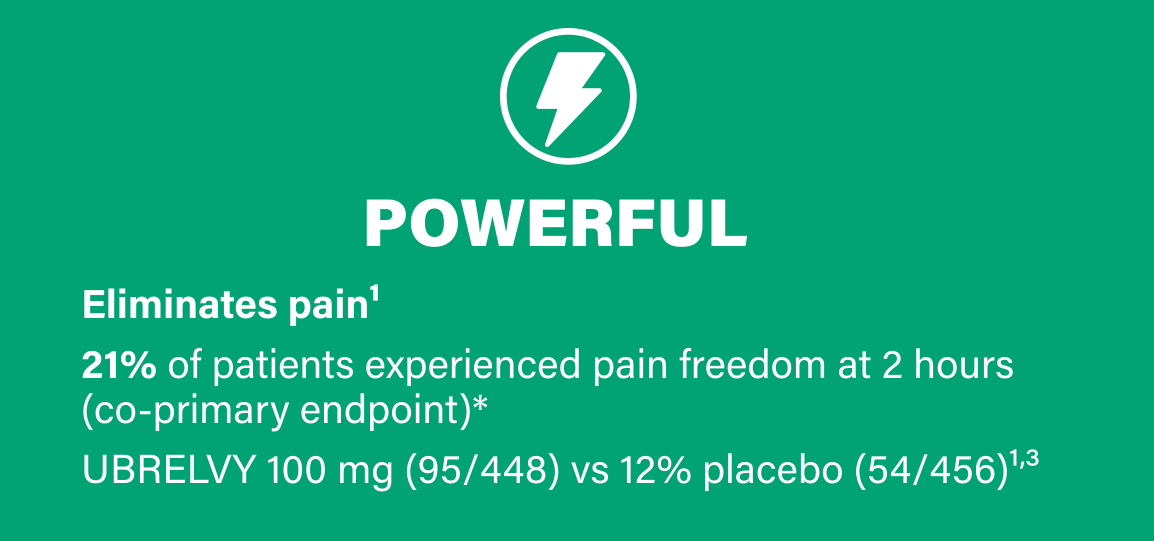
Co-primary endpoint: Pain freedom at 2 hours with a single dose1*
21% of patients (182/886) experienced pain freedom vs 13% placebo (119/912).1†
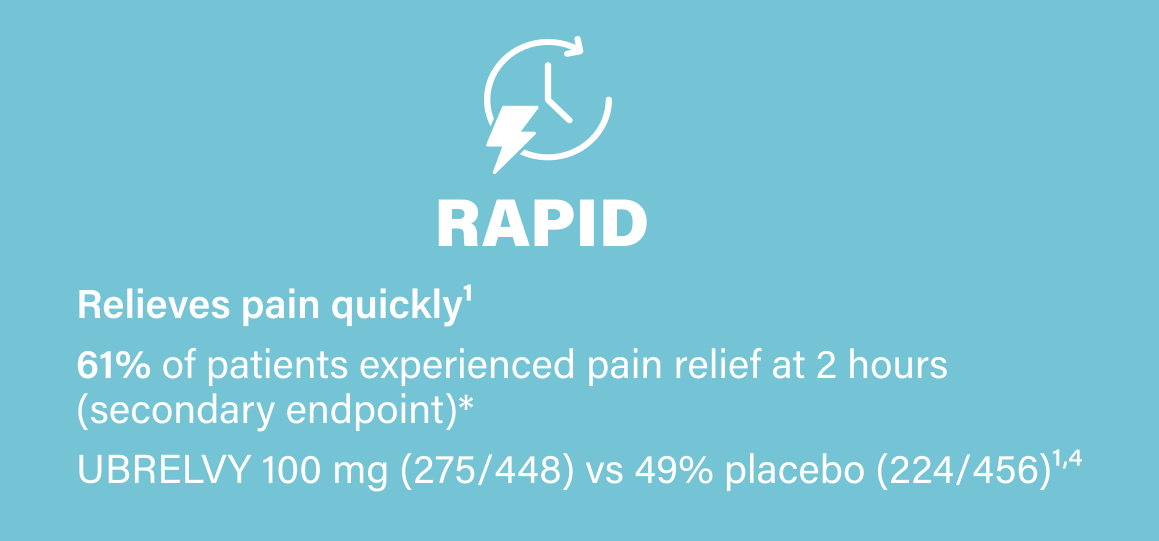
Secondary endpoint: Pain relief at 2 hours with a single dose1‡
62% of patients (547/886) experienced pain relief vs 49% placebo (444/912).1†
†P<0.05.2
*Pain freedom was defined as a reduction from moderate or severe headache pain to no pain.2
‡Pain relief was defined as a reduction in migraine pain from moderate or severe to mild or none postdose.2
Two randomized, double-blind, placebo-controlled, multicenter trials evaluated the efficacy and safety of UBRELVY in adults who had 2 to 8 migraine attacks of moderate
to severe pain per month. Data were pooled for the 50 mg analysis. A co-primary endpoint at 2 hours for UBRELVY vs placebo was freedom from most
bothersome symptom (photophobia, phonophobia, nausea): 50 mg: 39% (342/883) vs 28% (251/910) or 100 mg: 38% (169/448) vs 28% (126/454).
References: 1. Hutchinson S, Dodick DW, Treppendahl C, et al. Ubrogepant for the acute treatment of migraine: pooled efficacy, safety, and tolerability from the ACHIEVE I and ACHIEVE II phase 3
randomized trials. Neurol Ther. 2021;10(1):235-249. 2. UBRELVY [package insert]. North Chicago, IL: AbbVie Inc.; 2025.
UBRELVY® was evaluated in two randomized, double-blind, placebo-controlled, multicenter trials, ACHIEVE I (UBRELVY 50 mg or 100 mg) and ACHIEVE II (UBRELVY 50 mg). The studies evaluated the efficacy and safety of UBRELVY for the acute treatment of a single migraine attack of moderate or severe intensity in adults with a history of migraine with or without aura, who had 2 to 8 migraine attacks of moderate to severe pain in each of the previous 3 months. Patients received either 50 mg (n=886) or 100 mg (n=448), or placebo (n=912). Data were pooled for the 50 mg analysis. A second dose of UBRELVY or rescue medication could be taken from 2 to 48 hours after the initial dose of UBRELVY. Co‑primary endpoints at 2 hours for UBRELVY vs placebo were pain freedom (50 mg: 21% [182/886] or 100 mg: 21% [95/448] vs 13% [119/912]) and freedom from most bothersome symptom, defined as photophobia, phonophobia, or nausea (50 mg: 39% [342/883] vs 28% [251/910] or 100 mg: 38% [169/448] vs 28% [126/454]).
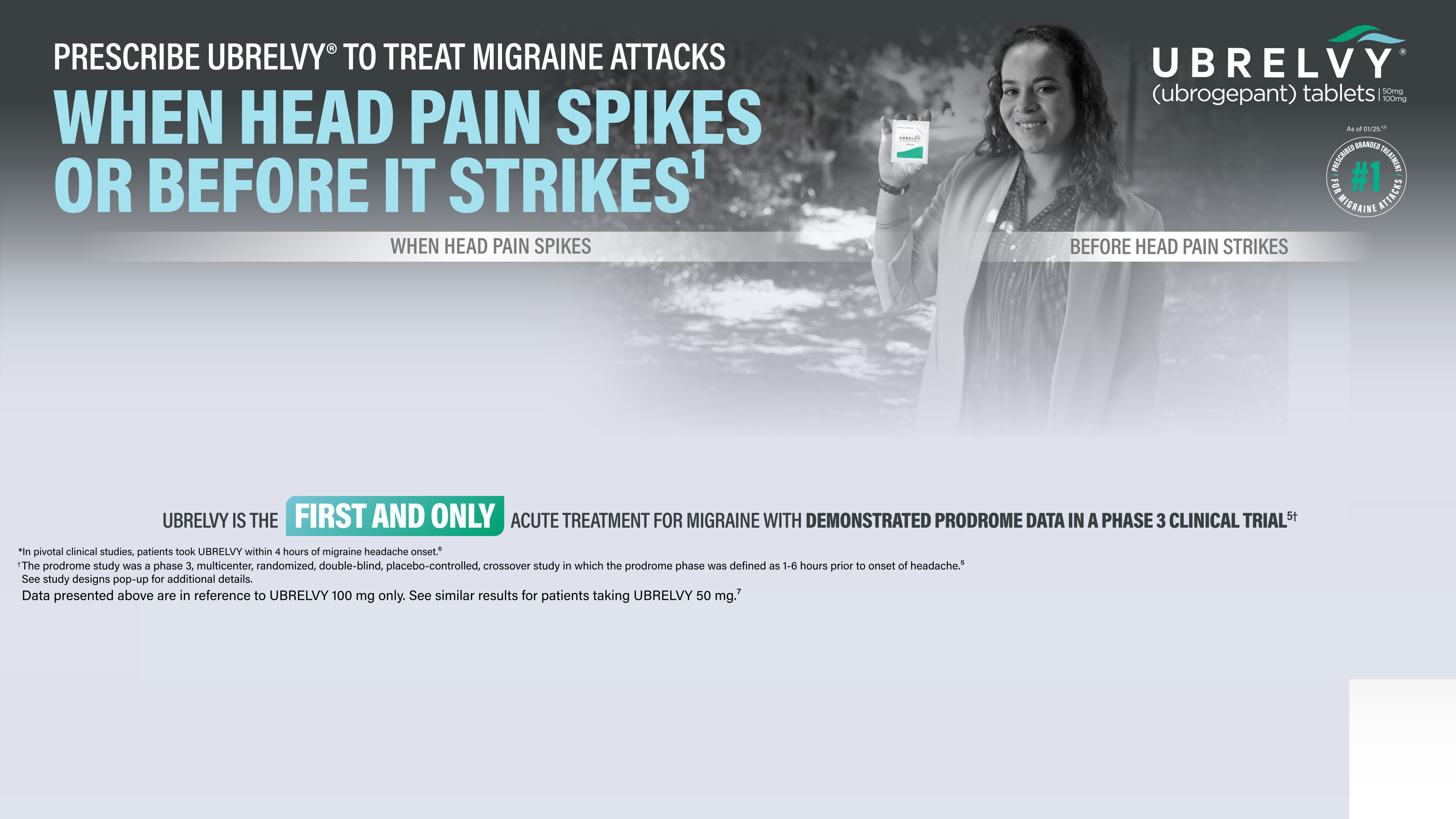
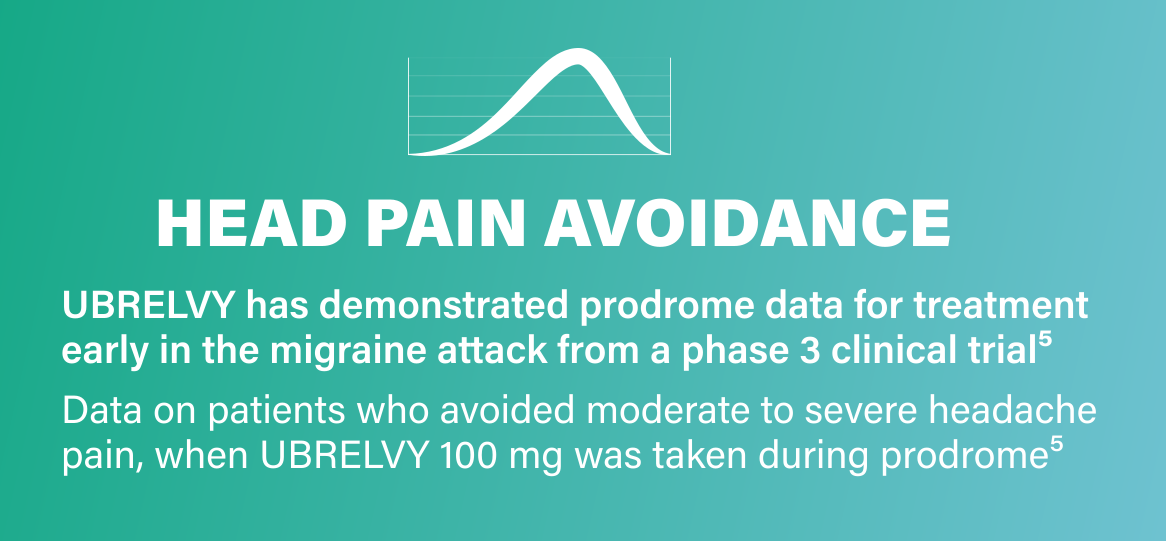
UBRELVY is the first and only acute treatment for migraine that has demonstrated data in the prodrome phase from a phase 3, double-blind, placebo-controlled trial.
This study was conducted for patients with migraine who recognized prodrome symptoms of a migraine attack 1 to 6 hours before the headache phase. Patients were between 18 and 75 years of age with ≥1-year history of migraine (with or without aura), consistent with a diagnosis according to the ICHD-3. Migraine onset occurred before 50 years of age. Migraine attacks occurred 2 to 8 times/month with moderate to severe headache, typically separated by 48 hours and lasting between 4 and 72 hours if untreated or treated unsuccessfully. Patients had current or past use of ≥1 prescription medication for the acute treatment of migraine or preventive treatment. Patients were eligible for randomization in the double-blind treatment period if ≥75% of 4 to 16 migraine attacks with prodrome symptoms led to headache pain (of any intensity) within 1 to 6 hours or, if only 3 migraine attacks with prodrome symptoms were identified, all were required to lead to headache 100% of the time.
HCP interview questions to determine patient eligibility:
77% of patients (n=911) reliably identified their prodrome symptoms, which included, but was not limited to, sensitivity to light (57%), fatigue (50%), neck pain (42%), sensitivity to sound (34%), and dizziness (28%).*†
After meeting eligibility criteria, randomized patients (n=518) treated 2 separate migraine attacks with prodrome symptoms (≥7 days apart), one with UBRELVY 100 mg and one with placebo.‡
1087 patients were screened for eligibility and 479 patients discontinued due to screening failure, including failure to meet inclusion criteria (317) and failure to screen due to a qualifying event (290).
ICHD-3=International Classification of Headache Disorders 3.
*Reliable identification was defined as at least 75% of the time.6
†Based on the 920 participants who entered e-diary data, and included a total of 4802 qualifying prodrome events during the screening period. The number of prodrome symptoms is not the same as the number of prodrome qualifying events.6
‡The 50 mg dose was not assessed. Patients were not allowed to administer a second dose.6
References: 1. UBRELVY [package insert]. North Chicago, IL: AbbVie Inc.; 2025. 2. Lipton RB, Dodick DW, Ailani J, et al. Effect of ubrogepant vs placebo on pain and
the most bothersome associated symptom in the acute treatment of migraine: the ACHIEVE II randomized clinical trial. JAMA. 2019;322(19):1887-1898. 3. Dodick DW,
Lipton RB, Ailani J, et al. Ubrogepant for the treatment of migraine. N Engl J Med. 2019;381(23):2230-2241. 4. Hutchinson S, Dodick DW, Treppendahl C, et al. Ubrogepant for the acute treatment of migraine: pooled efficacy, safety, and tolerability from the ACHIEVE I and ACHIEVE II phase 3 randomized trials. Neurol Ther.
2021;10(1):235-249. 5. Data on file. AbbVie Inc. 6. Dodick DW, Goadsby PJ, Schwedt TJ, et al. Ubrogepant for the treatment of migraine attacks during the prodrome:
a phase 3, multicentre, randomised, double-blind, placebo-controlled, crossover trial in the USA. Lancet. 2023;402(10419):2307-2316.
References: 1. UBRELVY [package insert]. North Chicago, IL: AbbVie Inc.; 2025. 2. Retail weekly prescription data from IQVIA as of 01/25. 3. Data on file. AbbVie Inc. 4. Dodick DW, Lipton RB, Ailani J, et al.
Ubrogepant for the treatment of migraine. N Engl J Med. 2019;381(23):2230-2241. 5. Dodick DW, Goadsby PJ, Schwedt TJ, et al. Ubrogepant for the treatment of migraine attacks during the prodrome: a phase 3,
multicentre, randomised, double-blind, placebo-controlled, crossover trial in the USA. Lancet. 2023;402(10419):2307-2316. 6. Dodick DW, Lipton RB, Ailani J, et al. Ubrogepant, an acute treatment for migraine,
improved patient-reported functional disability and satisfaction in 2 single-attack phase 3 randomized trials, ACHIEVE I and II. Headache. 2020;60(4):686-700. 7. Hutchinson S, Dodick DW, Treppendahl C, et al.
Ubrogepant for the acute treatment of migraine: pooled efficacy, safety, and tolerability from the ACHIEVE I and ACHIEVE II phase 3 randomized trials. Neurol Ther. 2021;10(1):235-249.


